
Schleicher County Bench Warrants Explained
A bench warrant is a court order tied to a missed setting or another failure to meet a court obligation. In Schleicher, the first question is venue: the JP handles countywide traffic and Class C matters, while Eldorado Municipal Court handles city ordinance and fine-only cases. County Court and the 51st District Court keep their own files.
An unpaid judgment may lead to a capias pro fine, a post-judgment writ, rather than the same process used for a new arrest charge. Ask the clerk which document exists and what the court requires.
Schleicher County Bench Warrant Triggers
A missed appearance and an unpaid fine are not the same event. Failure to appear can produce arrest process tied to the missed setting. A capias pro fine follows a judgment and unpaid or unfulfilled terms in a justice or municipal case. The person's citation or judgment tells the clerk which stage to check.
The JP's courtesy letter warns that missing its appearance date may add costs and license enforcement. Eldorado's drought-contingency ordinance directs a cited person to appear in Municipal Court and says a missed appearance may result in a warrant, though a summons may be used instead. That local document describes procedure, not any individual case.
How Schleicher County Bench Warrants Are Issued
The court that set the obligation decides what process follows a missed date or unpaid judgment. The JP or municipal judge may issue arrest process or a capias under current justice and municipal procedure. No public countywide warrant feed was found, and the county's courts do not publish a shared status portal.
Texas Chapter 45A sets current fine-only procedure for justice and municipal courts. It defines court-controlled options and recall steps, but the local materials do not publish a Schleicher motion form or standard walk-in docket.
For a JP or city ticket, start with the court named on the paper, not the nearest counter. A missed appearance can create an FTA issue; a post-judgment unpaid fine can involve a capias pro fine. The court can say which order was actually signed, whether it remains in effect, and whether counsel should arrange a setting. County and district criminal matters follow a different clerk and judge route.
Schleicher County JP Court Intake
The countywide JP handles its own Class C and traffic matters at (325) 853-2766. The published clerk schedule is 9 a.m. to 5 p.m. and stays open through lunch. The number-based nCourt route can help locate a JP ticket, but a missed date or possible capias should be confirmed with the court directly. A Municipal Court citation needs the city clerk instead.
Chapter 45A Changes Fine Process
Chapter 45A took effect January 1, 2025 and now holds the justice and municipal court rules. Article 45A.259 addresses a capias pro fine, including the amount in the judgment and recall when the defendant gives notice for a hearing or voluntarily appears and makes a good-faith effort to resolve the matter. The court must decide how the rule applies to the case.
The current Texas Chapter 45A text is the controlling source. Schleicher has not published local forms or implementation instructions.
The State's court-level overview helps distinguish JP, county, and municipal authority.
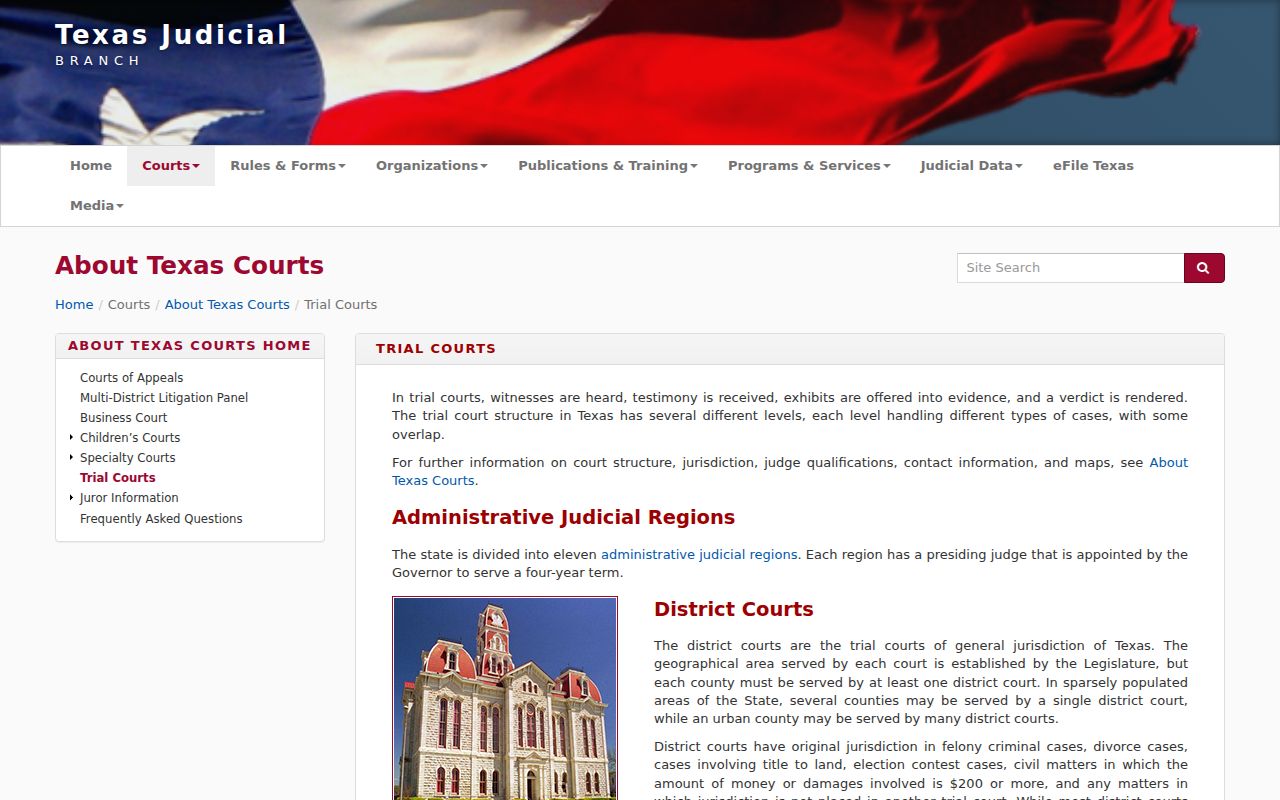
This hierarchy clarifies which lower court owns a citation or capias file.
The statute does not turn every unpaid ticket into an automatic warrant and does not publish a Schleicher-specific counter process. Article 45A.259 addresses a capias pro fine and court review of recall in defined circumstances. A person should tell the clerk whether the matter is before JP or Municipal Court, describe any hearing notice or appearance, and ask how to file the required request in that court.
Bench Warrants and Arrest Warrants Compared
Both can authorize an arrest, but they arise at different points. A bench warrant usually responds to a missed court duty in an existing case; an arrest warrant follows a magistrate's probable-cause review. The arrest warrant section covers the local issuance and service route.
| Feature | Bench Warrant | Arrest Warrant |
|---|---|---|
| Trigger | Missed setting or failure to comply. | Probable cause of an offense. |
| Who issues it | Judge or magistrate in the existing case. | Magistrate after complaint or affidavit. |
| File holder | JP, municipal, county, or district court. | Court with jurisdiction over the charge. |
| Resolution | Ask the issuing court about appearance or recall. | Ask the court or counsel about appearance, bond, or motion. |
Schleicher County Capias Warrant Options
The countywide JP lists payment plans, community service, jail credit, waiver, and indigency affidavit or hearing routes for its cases. Its courtesy letter allows guilty, nolo contendere, or not-guilty pleas; mailed pleas need a signature, printed name, date, and citation number. Personal checks are not accepted for mailed payment; the letter specifies money order or cashier's check.
These are JP instructions, not a city-court policy. Ask the court whether an option applies to the person's own capias and when the warrant status will change.
The JP's published instructions also list a $15 time-payment fee after a balance remains unpaid for 30 days. Its community-service information uses a $100 fine-credit amount for each eight hours performed, subject to the court's rules and eligibility review. These terms are tied to JP matters and should be reconfirmed with the clerk before relying on the amount or arranging service.
Chapter 45A governs fine-only procedure for justice and municipal courts; see the current Texas statutory text.
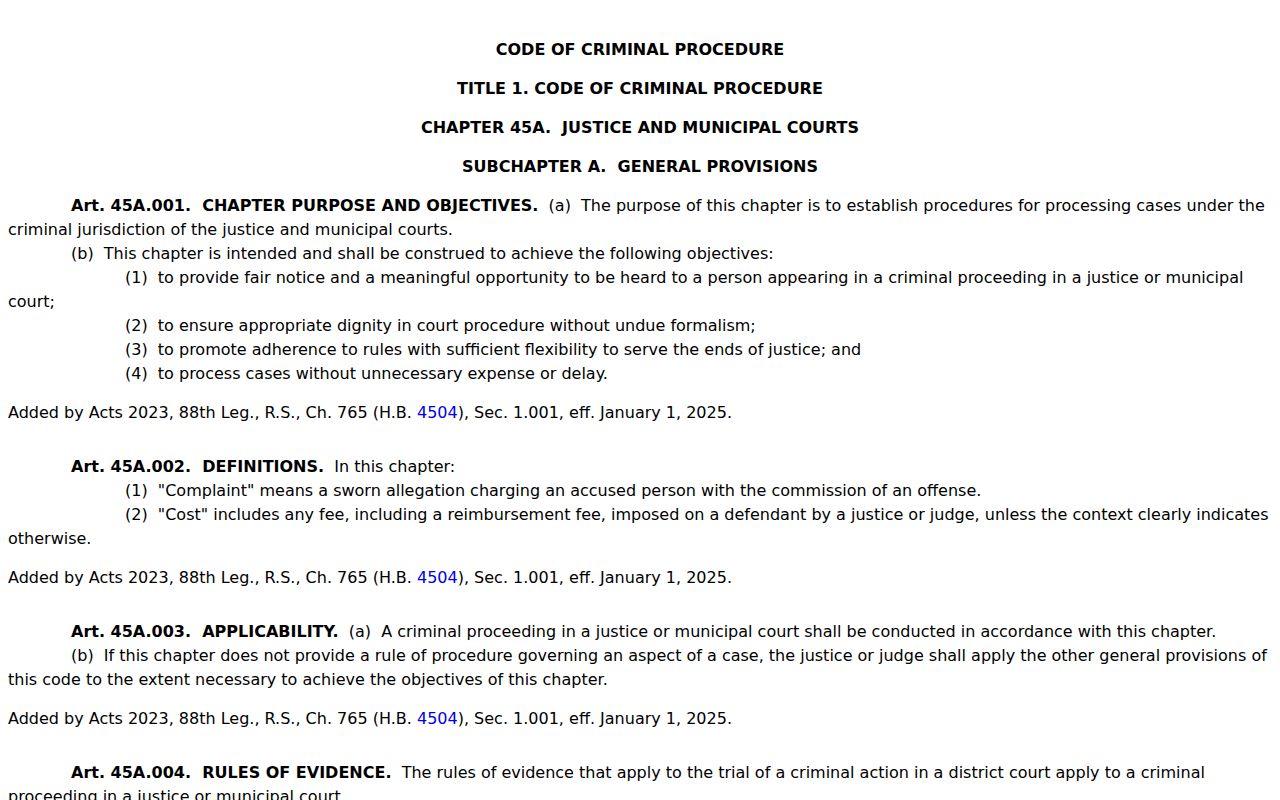
The chapter sets court procedures, while the local court must explain its application to an individual case.
Resolving a Schleicher County Bench Warrant
Call the issuing court before traveling. Ask whether the case is a missed setting, a capias pro fine after judgment, or another type of process; then ask whether a new setting, payment, hearing, bond, or attorney motion is appropriate. The county publishes no local recall form, walk-in docket, surrender window, or bond schedule.
- Use the cause or citation number to identify the court and current status.
- Ask the clerk which options the court allows and whether counsel should arrange an appearance.
- For a JP case, ask about payment, plan, service, waiver, hearing, or good-faith appearance options.
- Keep the receipt or order and confirm that the court updated its warrant record.
For a felony or another case outside the JP's fine-only authority, do not assume a payment plan or walk-in appearance is available. Ask the clerk whether the judge requires a motion, counsel, a setting, or a bond before appearing. If a court approves a step, obtain the signed order or written receipt and ask when its docket and any reporting system will reflect that change.
Caution: Do not assume a missed date or payment can be fixed at any counter; call the issuing court and confirm what to bring before appearing.
No Local Bond Schedule Exists
Schleicher County does not publish a bond schedule, bond-payment method, jail bond window, or safe-surrender instruction sheet. A number shown by an outside source may not apply to the person's court or case. Ask which court set any amount, whether the process is bondable, where payment is accepted, and whether an attorney can arrange a court setting before travel.
The county's County Judge page routes county-court questions; the JP and Eldorado Municipal Court answer lower-court matters. These offices cannot be treated as one shared counter.
The county-court contact page identifies a separate judicial route.
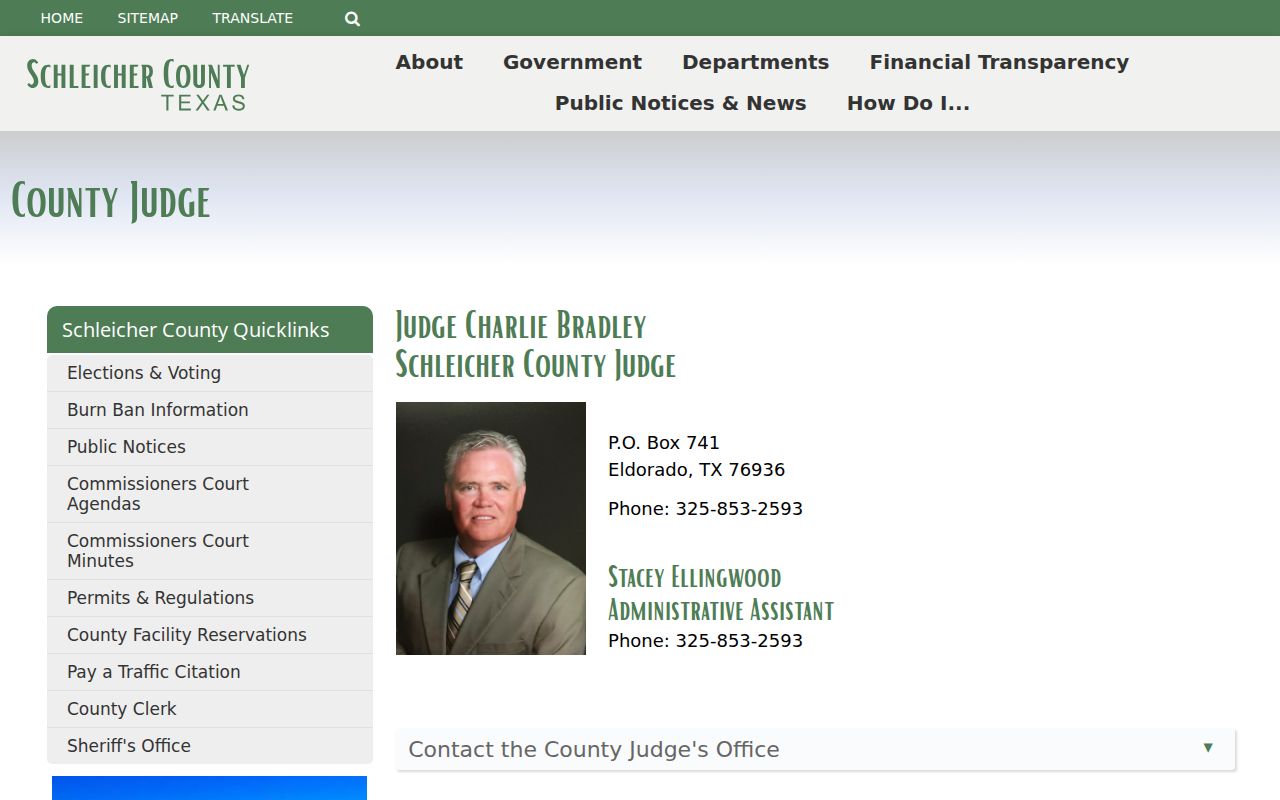
Call before travel to confirm the right court and its current instructions.
The combined County and District Clerk uses (325) 853-2833 and closes from noon to 1 p.m.; the county courthouse's general schedule is 9 a.m. to noon and 1 p.m. to 5 p.m. Justice Court can be reached at (325) 853-2766 and lists weekday hours of 9 to 5 without closing at lunch. Eldorado Municipal Court uses (325) 853-2691, but no counter hours or bond window are published. Verify which office can receive a filing before leaving home.
Finding the Court That Issued the Warrant
The court named on the citation or cause paper is the starting point. A county-road traffic citation normally routes to the countywide JP; a city ordinance case routes to Eldorado Municipal Court. County Court handles its misdemeanor jurisdiction, while felony files usually route through the 51st District Court and County and District Clerk.
The Sheriff can answer an agency-side question, but only the issuing court can decide recall or the next hearing. The Schleicher County warrant overview maps the related offices and contact paths.